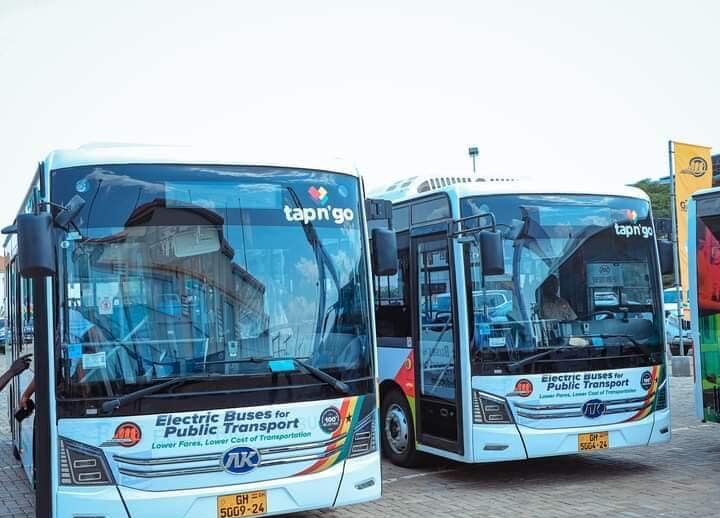
In a landmark initiative to modernize and promote sustainable public transportation, the Government of Ghana has commissioned 100 electric buses into service. This move aligns with Ghana’s commitment to reducing carbon emissions, improving urban mobility, and transitioning to greener energy sources.
The electric buses, equipped with state-of-the-art technology, are designed to provide an eco-friendly alternative to traditional diesel-powered public transport vehicles. These buses emit zero greenhouse gases during operation, supporting Ghana’s environmental agenda and contributing to the global fight against climate change.
At the commissioning ceremony, the Minister of Transport, Hon. Kwaku Ofori Asiamah, emphasized the government’s dedication to improving the quality of public transport while safeguarding the environment. “This initiative is a testament to Ghana’s commitment to adopting innovative solutions for a sustainable future,” the minister stated.
The buses are expected to operate across major urban centers, including Accra, Kumasi, and Takoradi, under the Metro Mass Transit Limited (MMT) t0 provide efficient, affordable, and clean transportation for thousands of daily commuters. Features such as air conditioning, Wi-Fi connectivity, and accessibility for persons with disabilities ensure a comfortable experience for passengers.
In addition, the buses are supported by a network of charging stations strategically placed across the country. These stations have been developed in partnership with private sector stakeholders to ensure seamless operations.
The introduction of these buses is expected to create employment opportunities in manufacturing, operations, and maintenance. Moreover, the shift to electric buses will reduce the country’s reliance on imported fossil fuels, saving foreign exchange and boosting energy security.
The project was executed through a public-private partnership, involving local and international investors. Key partners include electric vehicle manufacturers and renewable energy firms, who provided technical expertise and ensured adherence to global standards.
The initiative has been met with enthusiasm from Ghanaians, who have long called for improved public transport infrastructure. The government plans to expand the electric bus fleet over the next five years, with a target of 500 buses by 2030.
The Minister for Education, Haruna Iddrisu, and the Deputy Minister for Communications and Digital Technology,… Read More
Former National Chairman of the New Patriotic Party, Paul Afoko, and former Chief of Staff,… Read More
The Controller and Accountant General’s Department has announced that salaries for Government of Ghana employees… Read More
Plans are underway for a second memorial event honouring the late Ghanaian highlife legend Daddy… Read More
A video in which the leader of the Ajagurajah Movement, Bishop Kwabena Asiamah, popularly known… Read More
The Majority Leader, Mahama Ayariga, has called on the government to cancel its contract with… Read More